Roofing insight
Metal Roofing for Coastal South Louisiana
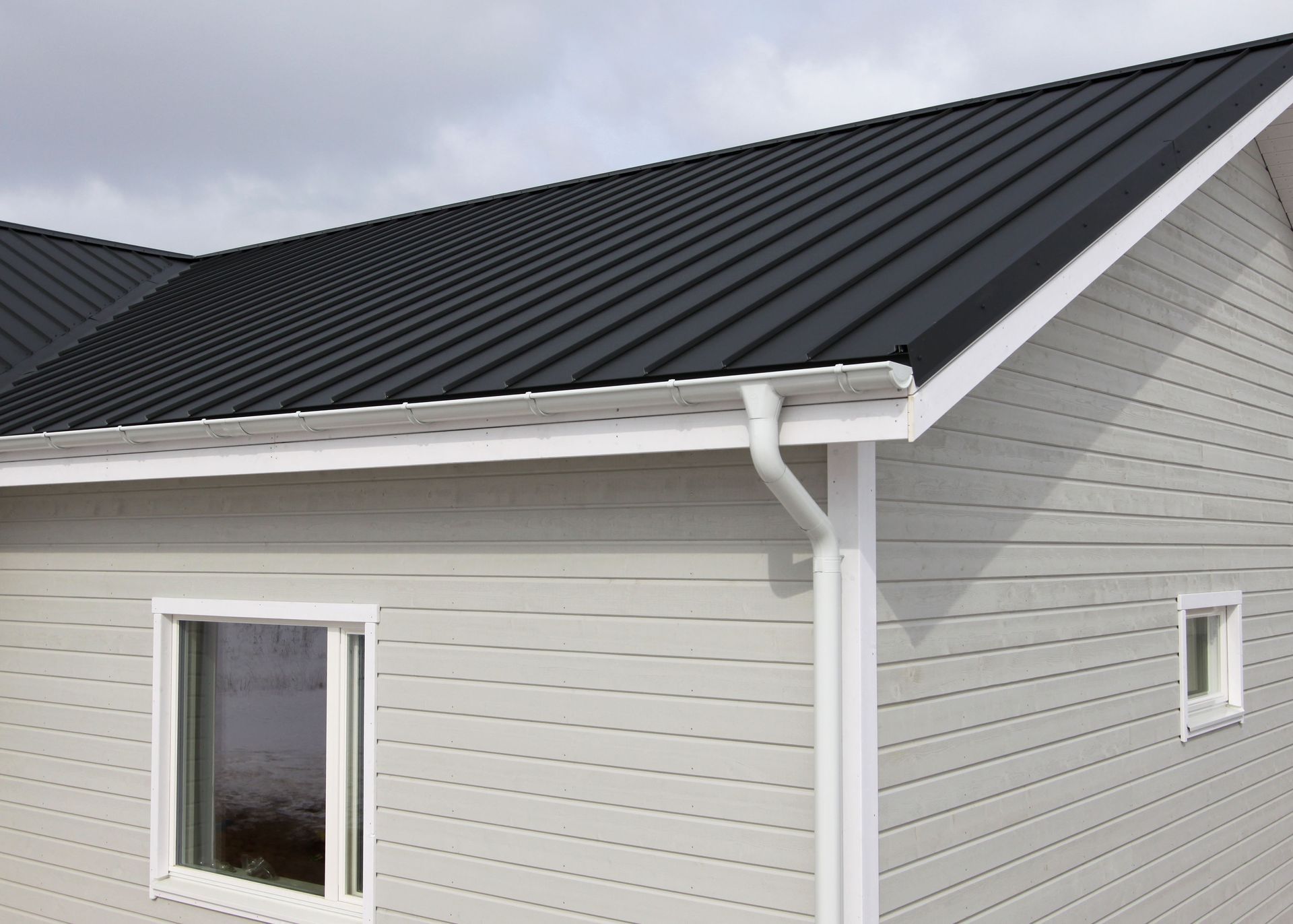
For a coastal South Louisiana home, the strongest metal-roof choice is not one universal panel. It is a complete assembly selected for the home's location, roof shape, deck, slope, and design pressures. Compare panel seams, tested uplift and impact classifications, corrosion protection, fasteners, installation details, maintenance, and lifecycle cost before comparing color or price.
Published July 22, 2026. Sources and product data checked July 22, 2026.
This guide is for homeowners from Hammond and Ponchatoula to Covington, Mandeville, Slidell, Denham Springs, and Baton Rouge. Salt exposure varies widely across that area. A house close to Lake Pontchartrain, tidal water, or the Gulf needs a different corrosion review from an inland house, even when both are described as coastal South Louisiana.
The short comparison is:
- Exposed-fastener panels use gasketed screws through the panel. They can be practical, but every exposed washer and penetration becomes part of the inspection plan.
- Snap-lock standing seam conceals most field fasteners beneath raised seams. The selected clip pattern, deck, edge details, and product approval still control wind performance.
- Mechanically seamed standing seam closes the seam with seaming equipment. Some tested assemblies suit lower slopes or greater uplift demands, but only their documents establish those uses.
- Metal shingles or tiles use smaller interlocking units. They can provide a different appearance, but their attachment pattern and tested assembly must be checked like any panel roof.
Which Metal Roof Panel Type Works Best Near the Louisiana Coast?
Standing seam is often the first system to evaluate for a coastal home because it conceals most fasteners and can accommodate panel movement through clips. Exposed-fastener panels may still fit some homes and budgets. Metal shingles can fit certain roof shapes. None is automatically suitable until its tested assembly matches the actual deck, slope, attachment, and design pressures.
The U.S. Department of Energy's Building America Solution Center metal roof guide separates metal roofing into shingles and panels, then divides panels into exposed-fastener and standing-seam systems. Its guide describes exposed-fastener panels as ribbed sheets attached with gasketed screws. Standing-seam panels use clips below raised seams and commonly run continuously from eave to ridge.
How do exposed-fastener panels compare?
Exposed-fastener panels place screws and sealing washers directly through the roof surface. This construction makes screw alignment, washer compression, compatible metals, and future inspection especially important. Thermal movement, ultraviolet exposure, salt, and installation errors can affect those small seals over time. An exposed-fastener roof is not automatically weak, but its maintenance plan must account for more exposed penetrations.
How do snap-lock and mechanically seamed panels compare?
Snap-lock panels join when one seam snaps over another. Mechanically seamed panels require a seamer to fold or close the joint after placement. Both normally conceal field fasteners under the seam. A mechanically seamed profile may be offered in assemblies for lower slopes or higher uplift loads, but the seam name alone proves nothing. Panel width, seam height, clips, clip spacing, substrate, perimeter conditions, and fasteners all change the tested result.
When should homeowners consider metal shingles?
Metal shingles or tile-look units can suit homes where a smaller module or traditional profile is preferred. More pieces mean more joints and attachment points, so the product's installation instructions remain critical. Ask for the exact evaluation report and verify that it covers the roof deck, underlayment, slope, fastening pattern, and coastal exposure proposed for the house.
What Do Tested Wind and Impact Ratings Actually Prove?
A tested rating proves that a named roof assembly met a defined laboratory standard in a specified configuration. It does not prove that every panel from that manufacturer will perform the same way, and it does not guarantee storm survival on a particular house. The assembly's tested uplift pressures must be checked against project-specific design pressures, especially at roof edges and corners.
The DOE guide says coastal high-wind homes generally require products and attachments that withstand greater loads. It directs buyers to the product's evaluation report for material, installation, fire, wind-uplift, and impact details. The same guide notes that panel profile, gauge, clips, fasteners, deck, and installation all affect storm performance.
The table below shows why a product name and test classification belong together. These are documentation examples, not a statement that Roofs Restored supplies either product or that either fits a specific home.
| Example product | Panel and substrate listed by manufacturer | Published wind test | Published impact test | What still requires verification |
|---|---|---|---|---|
| McElroy Metal U-Panel | 36-inch exposed-fastener panel; 26-gauge Galvalume; solid deck or open framing | UL 580 Class 90 | UL 2218 Class 4 | Current approval, deck, fastener type and spacing, edge zones, slope, allowable pressures, and local design criteria |
| McElroy Metal Meridian | Snap-together standing-seam system offered in 12- and 16-inch widths | UL 580 Class 90 | UL 2218 Class 4 | Exact width and gauge, clip spacing, deck, perimeter details, allowable pressures, and current approval |
UL 580 Class 90 is not a 90 mph wind rating. It is an uplift-test classification for an assembly. A contractor or design professional must use the current load table or product approval to compare allowable uplift pressure with the pressure calculated for the house. Substituting a wider panel, different fastener, wider clip spacing, or different deck can move the installation outside the tested configuration.
UL 2218 Class 4 is not a hail-proof guarantee. It describes performance in the standard's impact test. Actual hail and windborne debris vary in size, shape, speed, and angle. A metal roof can pass an impact test and still develop cosmetic dents or storm damage. Ask the manufacturer and insurer how cosmetic damage is treated; do not assume a policy discount or coverage outcome from a label.
Which Metal and Coating Choices Handle Salt, Humidity, and Sun?
Coastal durability depends on the metal substrate, metallic coating, paint system, cut edges, compatible accessories, and distance from saltwater. Galvanized steel, 55% aluminum-zinc alloy-coated steel often sold as Galvalume, aluminum, and copper behave differently. A generic promise of a "metal roof" is not enough for a salt-exposed property.
For coated steel, compare the documented metallic coating and paint system separately:
- Metallic coating: Galvanized steel uses zinc protection. Galvalume uses a 55% aluminum-zinc alloy coating. The specified coating weight, exposed edges, scratches, and local environment affect corrosion performance.
- PVDF paint: Polyvinylidene fluoride is often selected where long-term color retention and resistance to chalking matter. It still requires correct handling, compatible substrate protection, and warranty review.
- SMP paint: Silicone-modified polyester generally has a harder surface and can resist handling scratches well. Formulations vary, and color retention may differ from PVDF, especially on dark colors under strong sun.
- Bare or acrylic-coated metallic finishes: These expose the appearance of the metallic coating rather than a pigmented paint layer. Confirm that the manufacturer permits the product at the home's measured distance from saltwater.
Metal Construction News' November 3, 2025 comparison of SMP and PVDF coatings reports that PVDF is commonly selected for salt spray, intense sunlight, heat, and humidity, while modern SMP systems can serve many projects and offer a harder finish. The article also warns that coating warranties commonly exclude scratches, impact breaches, edge corrosion, substrate corrosion, and improper application. The correct question is therefore not simply "PVDF or SMP?" It is "Which substrate, pretreatment, paint specification, color, and written warranty apply at this address?"
Which Fasteners and Accessories Belong on a Coastal Metal Roof?
Fasteners, clips, flashing, sealants, and closures should be treated as one corrosion-compatible system. A durable panel can still be undermined by a rusting clip, incompatible screw, trapped debris, or flashing that directs runoff from one metal onto another. Near saltwater, the exact fastener alloy and manufacturer approval deserve written confirmation before work starts.
The DOE Building America guide, citing IBHS FORTIFIED guidance, calls for stainless steel fasteners or clips on metal roofs within 3,000 feet of a saltwater coastline. It also advises galvanized fasteners for steel roofs and copper, brass, bronze, copper alloy, or 300-series stainless steel fasteners for copper roofs. Those are selection rules, not permission to mix any stainless screw with any panel.
Ask the proposal to identify:
- Panel metal, gauge, metallic coating, and paint system.
- Clip material and spacing for each roof zone.
- Screw material, diameter, length, head, and sealing washer where applicable.
- Flashing metal at eaves, rakes, valleys, walls, and penetrations.
- Sealant and closure products approved by the panel manufacturer.
- Isolation details where dissimilar metals could touch or receive runoff from each other.
The fastener must also be driven correctly. The DOE guide warns against underdriving, overdriving, or angling exposed screws because the washer must seal without being crushed. For standing seam, clips and corrosion-resistant screws must match the manufacturer's tested configuration.
What Maintenance Does a Coastal Metal Roof Need?
A coastal metal roof needs scheduled observation, prompt post-storm checks, drainage and debris control, and repairs made with compatible materials. Maintenance frequency should follow the panel manufacturer's instructions and actual exposure. Salt deposition, overhanging trees, roof geometry, nearby construction, and storm history can justify more frequent checks than an inland roof requires.
Use this practical inspection list:
- After severe weather: Check from the ground for displaced panels, opened seams, bent flashing, punctures, debris, and damaged gutters. Use a roofing professional for roof access.
- At routine inspections: Review seams, exposed screws and washers, clips where accessible, sealant, closures, penetrations, valleys, eaves, and cut edges.
- Keep drainage open: Remove leaves, pine straw, branches, and sediment that hold moisture or block valleys and gutters.
- Watch for corrosion: Address scratches, red rust, white corrosion products, runoff stains, and rusting accessories according to manufacturer instructions.
- Document changes: Keep dated photos, inspection notes, product data, warranty terms, and repair records.
- Use compatible repairs: Do not add an unknown sealant, screw, coating, or metal patch that could trap water, violate instructions, or create galvanic corrosion.
The Metal Construction Association's October 2018 service-life assessment of unpainted 55% aluminum-zinc standing-seam roofs inspected 14 roofs with up to 35 years of service. It recommended regular inspections, at least twice-yearly debris cleaning where leaves or dirt accumulate, and cleaning in wet climates where algae develops. The study covered low-slope, unpainted systems and should not be treated as a service-life promise for a painted residential roof near saltwater.
If an inspection finds a localized issue, review Roofs Restored's metal roof repair and installation services in South Louisiana. If the existing roof is asphalt and damage appears limited, compare shingle roof repair options before assuming replacement is necessary.
How Should Homeowners Compare Metal Roof Lifecycle Cost?
Compare lifecycle cost by adding the initial project, expected inspections, cleaning, repairs, coating or sealant work, and future replacement costs over the same study period. Then account for when each cost occurs. A higher first proposal can have a lower lifecycle cost, but metal roofing does not guarantee savings without house-specific bids and realistic maintenance assumptions.
The DOE's Building Life Cycle Cost program overview explains that lifecycle analysis compares alternatives with different initial and operating costs over a common project life. It uses present-value methods rather than simply dividing a bid by a claimed roof lifespan. Homeowners do not need federal software to ask for the same categories in competing proposals.
Build a comparison with these rows:
| Cost input | What to request in writing |
|---|---|
| Initial roofing work | Tear-off or recover scope, deck repairs, underlayment, flashing, ventilation work, panels, trim, labor, permits, and disposal |
| Tested assembly | Current approval or evaluation report, load table, panel width and gauge, clip or screw spacing, deck, and edge-zone details |
| Corrosion system | Substrate, metallic coating, paint system, fasteners, clips, flashing, sealants, and salt-distance warranty exclusions |
| Routine ownership | Inspection and cleaning schedule, access needs, and likely service items for exposed fasteners, sealants, or coatings |
| Storm-related work | Inspection process and repairability; use the same assumptions for every roof option without predicting insurance results |
| Study period and residual life | One common number of years for all options, plus the documented basis for replacement timing or remaining value |
Do not count an energy saving unless an analysis supports it for the home's color, insulation, ventilation, equipment, thermostat use, and utility rates. Do not count an insurance discount until the insurer confirms it in writing for the exact product and policy. For a lower-initial-cost alternative, compare the full scope of shingle reroofing in South Louisiana over the same period rather than comparing material price alone.
What Should Be Confirmed Before Signing a Metal Roof Proposal?
Before signing, require a proposal that identifies the exact roof assembly and connects each performance claim to current documentation. The bid should separate tested classifications, engineering or code requirements, manufacturer warranty terms, contractor scope, and owner maintenance. If a number cannot be tied to the selected assembly and house, treat it as marketing rather than a project specification.
Confirm these items:
- Exact manufacturer, product, panel width, gauge, substrate, coating, and color.
- Current evaluation report, product approval, load table, and installation instructions.
- Project design pressures and the assembly's allowable pressures for field, edge, and corner zones.
- Deck condition, underlayment, flashing, ventilation, penetrations, and water-shedding details.
- Fastener and clip materials, spacing, and saltwater-distance requirements.
- Written finish, substrate, weather-tightness, and workmanship terms, including exclusions.
- Inspection and maintenance schedule, plus who performs post-storm assessments.
- Complete lifecycle-cost inputs without assumed utility, insurance, resale, or repair savings.
Roofs Restored Louisiana LLC in Hammond can inspect a South Louisiana roof and prepare a house-specific scope. Request a free roofing estimate to compare metal and shingle options using the roof's actual condition, location, and design requirements.
Sources Checked July 22, 2026
- U.S. Department of Energy Building America Solution Center: Metal Roofs
- McElroy Metal: U-Panel product data
- McElroy Metal: Meridian product data
- Metal Construction News: SMP vs. PVDF Coatings, November 3, 2025
- Metal Construction Association: Service Life Assessment, October 2018
- U.S. Department of Energy Federal Energy Management Program: Building Life Cycle Cost Programs