Roofing insight
Louisiana Roof Insurance Claim Checklist
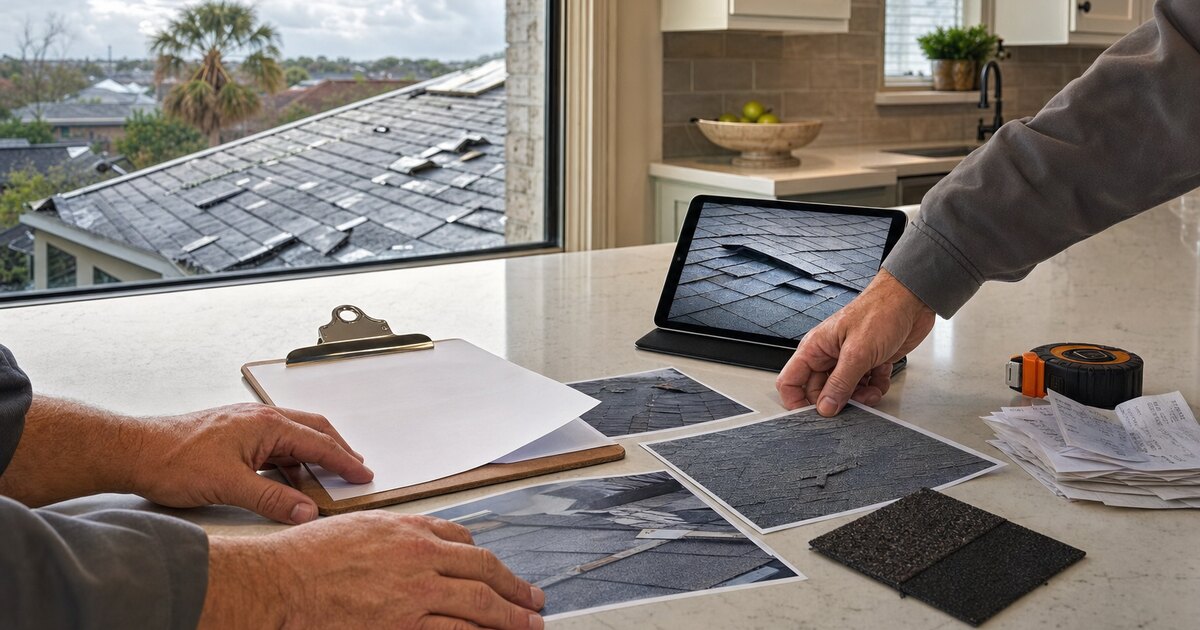
For a Louisiana roof insurance claim, protect people first, document the condition before permanent repair, notify the insurer promptly, and keep receipts. A roofer can inspect damage and prepare a construction estimate. Only the insurer can interpret the policy, decide coverage, apply deductibles or depreciation, and approve payment.
This checklist helps South Louisiana homeowners organize the inspection-to-claim-to-repair process without treating a contractor's opinion as an insurance decision.
What Are the First Five Steps in a Roof Insurance Claim?
The first five steps are safety, documentation, temporary protection, insurer notice, and a professional scope. Their order matters because urgent work may be necessary while the original condition still needs to be recorded.
- Make the property safe. Follow local officials and avoid electrical, flood, ceiling, tree, and structural hazards.
- Photograph visible damage. Capture wide views, close details, and interior water evidence.
- Limit additional damage safely. Use temporary protection when necessary and keep every receipt.
- Contact the insurer. Ask what it requires before permanent repair or disposal of damaged materials.
- Get written roof findings. Request an inspection report and itemized construction estimate.
Ready.gov advises residents to document property damage with photographs and contact the insurer after a hurricane. FEMA's severe-weather documentation guide, released April 16, 2025, also recommends photos and video of structural and personal-property damage plus receipts for purchases and repairs.
Which Roof-Damage Photos Are Most Useful?
Useful photos establish location, scale, condition, and timing. Start with each side of the property from a safe distance, then photograph visible roof and gutter changes from the ground. Inside, capture the full room before taking close photos of stains, wet finishes, or damaged belongings.
Label or log each image with:
- Property address
- Storm or discovery date
- Exterior side, roof slope, or room
- Wide-view and close-view relationship
- Temporary work performed afterward
- Name of the person or company that created the record
Keep original files even if you make annotated copies. Do not climb onto a damaged roof for better pictures. A professional can document roof-level conditions using appropriate access and safety measures.
What Should You Ask the Insurance Company?
Ask the insurance company about its process, required records, inspection timing, policy deadlines, and the person assigned to the claim. Direct coverage questions to the insurer rather than relying on a roofing proposal.
Use these questions:
- What claim number and contact information should I use?
- Does the insurer need to inspect before permanent roof work begins?
- What documentation is needed for temporary protection and permanent repair?
- Which deductible may apply to the reported event?
- Are there deadlines for notice, proof of loss, estimates, or other documents?
- Should removed roofing or other damaged materials be retained?
- How are wind, wind-driven rain, and flood water addressed under this policy?
- How will the insurer communicate its coverage and payment decision?
The Louisiana Department of Insurance's Consumer's Guide to Homeowners Insurance, revised October 2025, advises consumers to keep records of claim conversations, list temporary repairs, save receipts, and speak with the insurer before signing contracts or work orders.
What Is the Roofer's Role in an Insurance Claim?
The roofer's role is construction: inspect accessible roof conditions, photograph findings, identify affected components, explain repair or replacement options, and price the proposed scope. The roofer should not promise coverage, interpret policy language, decide the deductible, approve the claim, or guarantee reimbursement.
A useful roofing estimate identifies:
- Affected slopes and roof components
- Material type and estimated quantities
- Tear-off, disposal, and property protection
- Deck, underlayment, flashing, ventilation, and drainage work
- Known conditions and concealed-damage allowances
- Permit responsibility and installation requirements
- Repair versus replacement reasoning
Compare the estimate against the 2026 South Louisiana roof replacement cost guide, which explains why roof area, material, tear-off, deck condition, flashing, access, and local requirements affect price.
What Should You Avoid During the Claim Process?
Avoid unsafe roof access, undocumented permanent work, promises that a claim will be approved, and pressure to sign before the scope and payment terms are clear. Do not assume storm damage automatically means full replacement or that one visible issue represents the entire roof.
Also avoid combining separate decisions:
| Decision | Who makes it |
|---|---|
| Whether an area is safe to enter | Public officials, utilities, emergency responders, and qualified professionals as applicable |
| What roof construction is damaged | Roofing contractor or appropriate building professional |
| What work is proposed and how much it costs | Contractor in a written estimate |
| Whether the policy covers the reported loss | Insurance company |
| Whether to authorize a contract | Property owner |
If a claim is denied or policy language is disputed, request the insurer's explanation in writing. Seek help from the Louisiana Department of Insurance or an appropriately licensed insurance or legal professional when needed.
When Can Permanent Roof Repair Begin?
Permanent repair can begin after urgent safety needs are handled, the condition is documented, the scope is understood, and any insurer inspection or documentation requirement has been addressed. Do not delay work needed to prevent an immediate hazard, but keep temporary measures and permanent construction clearly documented.
What Should You Confirm Before Authorizing Roof Work?
Before signing a repair or replacement agreement, separate the construction contract from the insurer's coverage decision and confirm what the contractor will do on the property. A complete agreement should identify the approved scope, price, payment terms, allowances, exclusions, change-order process, expected schedule, and required permits.
Also confirm:
- Driveway, yard, attic, and electrical access needed for the work
- Protection for vehicles, landscaping, siding, windows, and outdoor equipment
- Material and debris staging, daily cleanup, and final nail collection
- Temporary protection and schedule changes during unsafe weather
- Who can approve concealed decking, flashing, or structural work
- Final walkthrough, photographs, invoices, and installed-product records
The storm damage roof repair and insurance claims hub connects immediate safety, documentation, contractor comparison, and repair-versus-replacement decisions in one place. The post-storm roof inspection checklist explains what to observe before the estimate. For localized shingle or flashing damage, review South Louisiana shingle roof repair services. For broader damage, compare shingle reroofing options only after the inspection supports replacement.
How Can Roofs Restored Help?
Roofs Restored offers South Louisiana homeowners a free inspection within 24 hours and a free same-day estimate. The licensed and insured company can document visible roof conditions, explain the proposed repair or replacement scope, and price the roofing work. Inspection timing depends on safe weather, access, and damage conditions. Roofs Restored does not decide insurance coverage or payment.
Request your free storm-damage roof inspection or call 985-222-2647 to discuss the condition and schedule an inspection. Review the storm damage and roof insurance claims hub for the complete inspection-to-claim-to-repair workflow.
Sources Reviewed July 28, 2026
- Louisiana Department of Insurance: Consumer's Guide to Homeowners Insurance, revised October 2025
- FEMA: How to Document Damages After Severe Weather Events, April 16, 2025
- Ready.gov: Hurricanes, updated July 9, 2026