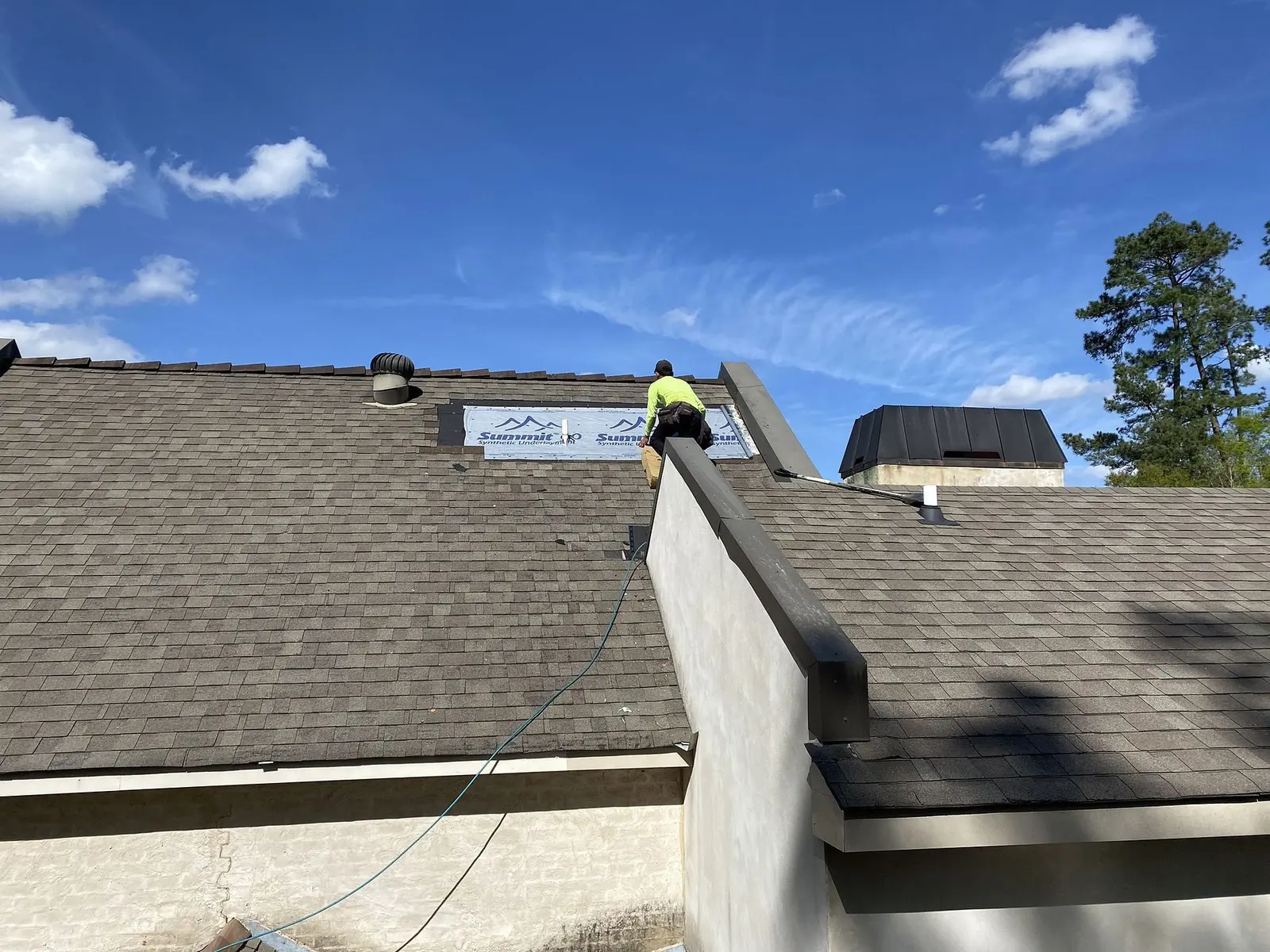
What Should You Do After a Storm Damages Your Roof?
After a hurricane, hailstorm, or high-wind event, protect people first, document visible conditions, limit additional water entry only when it is safe, notify the insurer promptly if you may make a claim, and arrange a professional roof inspection. Roofs Restored in Hammond provides South Louisiana homeowners with free inspections, documented roof findings, repair or replacement options, and free same-day estimates. The roofing scope and the insurance decision remain separate: the roofer explains construction conditions and cost, while the insurer interprets the policy and decides coverage and payment.
Use this order after severe weather:
- Wait for safe conditions. Follow evacuation, reentry, flood, utility, and downed-line instructions from local officials.
- Keep people out of hazardous areas. Stay away from wet electrical equipment, sagging ceilings, unstable trees, standing water, and visible structural movement.
- Check from the ground and interior. Look for active water, ceiling stains, missing roofing, bent flashing, loose gutters, branches, and changes in the roof line.
- Photograph before cleanup or permanent repair. Capture wide views and close details, record the storm and discovery dates, and keep the original files.
- Limit water entry safely. Move belongings or place a container only from a stable, dry location. Leave roof tarping to trained workers when weather and access permit.
- Contact the insurer. Ask what records, inspection steps, deadlines, and damaged materials the company requires.
- Request a written roof inspection. Ask the contractor to connect each finding to repair, replacement, monitoring, or another qualified evaluation.
Ready.gov tells residents to follow local officials after a hurricane, avoid wet electrical equipment, photograph property damage, and contact the insurance company for assistance. OSHA describes storm-damaged roofs as potentially slippery, unstable, and close to electrical lines. Those safety limits come before a closer roof view.
What Storm Damage Can a Roof Inspection Find?
A professional storm damage inspection checks more than missing shingles. Wind, hail, branches, and wind-driven rain can affect the covering, flashing, penetrations, valleys, edges, deck, drainage, and interior. Water may enter at one detail and travel along decking or framing before appearing on a ceiling several feet away, so the nearest stain does not prove where the opening is.
| Area inspected |
Possible wind, hail, or rain evidence |
Why it changes the scope |
| Asphalt shingles |
Missing tabs, lifted or creased edges, tears, cracks, impact marks, or fresh granule loss |
The contractor must determine whether compatible shingles can restore the affected area |
| Metal roofing |
Displaced panels or trim, open seams, loose fasteners, punctures, or dents near joints |
Panel profile, coating, fastening, flashing, and material compatibility affect repairability |
| Flashing and penetrations |
Bent, separated, or open details at walls, chimneys, valleys, vents, and pipes |
Small openings can admit wind-driven rain and may require work beyond the roof covering |
| Deck and attic |
Wet decking, damp insulation, water trails, daylight, soft areas, or movement |
Concealed moisture or damaged wood can change a surface repair into a broader construction scope |
| Gutters and roof edges |
Twisted gutters, loose fascia, damaged soffit, blocked drainage, or displaced edge metal |
Edge and drainage damage can direct water behind exterior materials or back toward the building |
| Interior |
Active drips, ceiling or wall stains, peeling finishes, wet flooring, or sagging material |
Interior evidence helps trace timing and water paths but does not identify the roof opening by itself |
Some storm damage is hidden from the yard. The reverse is also true: a visible mark does not automatically prove functional damage or require full replacement. A useful inspection shows the location, condition, uncertainty, and recommended next step instead of applying one storm rule to every roof.
How Does the Insurance Claim Process Work With a Roofer?
The storm damage roof insurance process works best when safety, construction, and coverage decisions stay in the correct hands. Roofs Restored can inspect accessible conditions, photograph findings, identify affected roof components, explain the proposed construction scope, and prepare an estimate. The property owner reports the loss and authorizes work. The insurer decides what the policy covers, which deductible or depreciation applies, what documents it needs, and how much it will pay.
1. Make the property safe
Follow official instructions and keep people away from electrical, ceiling, tree, flood, and structural hazards. Emergency services, utilities, and other qualified professionals may need to address immediate hazards before roof work begins.
2. Record the original condition
Photograph the property from safe locations before cleanup, temporary protection, or permanent work changes the scene. Record the address, storm date, discovery date, room or roof side, and any later work. FEMA guidance issued April 16, 2025 recommends photographs and video of structural and personal-property damage plus receipts for purchases and repairs.
3. Arrange a professional roof inspection
Roofs Restored checks the roof covering, flashing, penetrations, valleys, edges, drainage, and accessible deck or interior evidence. You receive findings tied to affected areas rather than a claim approval prediction. A free same-day estimate describes the proposed construction work when the visible conditions allow the scope to be prepared that day.
4. Notify the insurer and ask for its requirements
Use the phone number, website, or agent shown on the policy. Ask for the claim number, assigned contact, inspection process, deadlines, required records, applicable deductible information, and instructions for damaged materials. Ask how the policy addresses wind, wind-driven rain, and flood water rather than assuming those causes are handled the same way.
5. Support the insurer inspection with construction records
Give the insurer the dated photographs, roof findings, temporary-work receipts, and itemized estimate it requests. If the insurer or adjuster has questions about materials, quantities, or the proposed construction scope, Roofs Restored can answer those roofing questions. The contractor does not act as the insurer, public adjuster, or coverage decision-maker.
6. Compare the insurer decision with the roofing scope
Read the insurer communication and the roofing estimate as separate documents. Ask the insurer to explain coverage and payment decisions in writing. Ask the roofer to explain any difference in measured area, affected components, material, code-related construction, or price. Do not authorize added work until the scope, price, payment terms, and change-order process are clear.
7. Authorize repair or replacement and keep final records
Once you understand the construction contract and the insurer requirements, authorize the agreed work. Keep product records, change orders, progress photographs, invoices, receipts, final walkthrough notes, and insurer messages in one folder. Those records support future maintenance and show what work was completed; they do not change the policy decision.
The Louisiana Department of Insurance Consumer's Guide to Homeowners Insurance, revised October 2025, advises policyholders to keep claim-conversation records, list temporary repairs, save receipts, and speak with the insurer before signing contracts or work orders.
What Should Roof Damage Documentation Include?
Good roof documentation lets the homeowner, contractor, and insurer discuss the same observed conditions without blurring their roles. It should identify location, scale, timing, material, and uncertainty. A collection of unlabeled close-up images is less useful than wide views connected to specific details and a written scope.
Ask for these records:
- Dated photographs tied to a roof slope, edge, room, or component
- Wide views that establish location plus close views that show condition
- Separate notes for storm observations and pre-existing wear or maintenance
- The reported storm date, discovery date, and leak history
- A description of temporary protection already installed
- Named roofing materials and estimated quantities
- Deck, underlayment, flashing, ventilation, drainage, tear-off, and disposal items
- A repair-versus-replacement explanation based on the inspected roof
- Known exclusions and concealed conditions that may require a written change order
- The proposed schedule, property protection, cleanup, and final documentation
Roofs Restored works with shingle products from GAF, CertainTeed, and Owens Corning. A storm estimate should name the proposed product rather than saying only "architectural shingle." Existing color, weathering, discontinued products, tested wind configuration, impact classification, underlayment, fastening, flashing, and manufacturer instructions can all affect whether a specific repair or replacement assembly fits the property.
Is Storm Damage a Roof Repair or a Full Replacement?
Storm damage does not automatically require a full roof replacement. A targeted repair may fit when damage is isolated, surrounding materials remain serviceable, compatible components are available, and the deck, flashing, and underlayment can be restored within a reliable scope. Replacement may deserve consideration when damage is widespread, several slopes or systems have failed, the deck has broad damage, leaks recur in unrelated areas, or available materials cannot form a reliable transition.
| Decision factor |
Targeted storm repair may fit |
Broader restoration or replacement may fit |
| Damage pattern |
One limited area or detail is affected |
Multiple slopes, edges, penetrations, or systems are affected |
| Surrounding roof |
Adjacent materials remain serviceable |
Widespread deterioration or repeated unrelated leaks limit a durable repair |
| Material compatibility |
Matching or compatible materials can be integrated |
Existing material is discontinued, too weathered, or cannot form a reliable transition |
| Deck and underlayment |
Damage can be isolated and restored within the repair area |
Moisture, impact, or movement extends across a broader area |
| Flashing and drainage |
One detail can be rebuilt without disturbing connected systems |
Valleys, walls, edges, gutters, or several penetrations require coordinated work |
| Written evidence |
Photos and scope support a limited repair |
Inspection findings explain why spot work would leave unresolved failures |
No universal roof age, damage percentage, hail size, or cost ratio answers the question for every South Louisiana home. Compare the actual roof condition, repairability, material availability, written price, and remaining system. If replacement is proposed, ask the contractor to show why the repair option would not restore a reliable assembly.
How Should You Compare Hail and Wind Damage Contractors?
The best local storm damage roof repair company for a specific home is the contractor that can verify its qualifications, document the roof clearly, explain repair versus replacement, name the proposed materials, and remain accountable after the storm. A high-pressure claim promise is not a substitute for construction evidence.
| What to compare |
Strong evidence |
Warning sign |
| Local identity |
Consistent business name, service area, phone, and reachable office or mailing address |
Temporary contact details or no clear local accountability |
| Licensing and insurance |
Current documents that apply to the proposed work and can be verified |
Refusal to provide documents or vague claims of being fully certified |
| Inspection |
Dated photos, affected components, uncertainties, and written findings |
A replacement recommendation without showing the condition |
| Insurance role |
Contractor prices construction and directs policy questions to the insurer |
Claims that the contractor controls insurer approval, coverage, settlement, deductibles, or payment |
| Estimate |
Itemized materials, quantities, tear-off, deck, flashing, ventilation, cleanup, and exclusions |
One total price without the work needed to compare bids |
| Product selection |
Exact GAF, CertainTeed, Owens Corning, metal, underlayment, flashing, or accessory product identified |
"Premium materials" without manufacturer, product, color, or installation details |
| Follow-up |
Written change orders, final walkthrough, photographs, invoices, and contact after completion |
Pressure to sign immediately or unclear responsibility after payment |
Ask every contractor the same questions. Verify credentials, compare the same construction scope, and require explanations in writing. A lower bid may omit deck work, flashing, ventilation, property protection, permits, disposal, or a reliable transition to existing materials. A higher bid is not automatically better either; the evidence and scope must explain the difference.
What Is Different About Hurricane, Hail, and Wind Damage in South Louisiana?
South Louisiana roofs can face hurricane winds, wind-driven rain, hail, branches, prolonged rain, high humidity, and later storms before permanent work begins. The National Weather Service New Orleans/Baton Rouge wind-impact table notes that some homes can receive minor shingle or siding damage at 39 to 50 mph, with broader effects described at higher wind ranges. Actual damage still depends on the building, roof condition, installation, debris, exposure, and wind at that property.
Hurricane recovery may involve utility restrictions, flood hazards, blocked roads, unsafe trees, material demand, and limited safe work windows. Wind-driven rain can enter at edges, walls, valleys, vents, and flashing even when most roofing remains in place. Hail can affect shingles, metal panels, vents, flashing, gutters, and other soft metals, but impact appearance alone does not determine function or insurance coverage.
For hurricane and hail work, ask the estimate to identify the exact roof assembly and applicable installation details. Product wind ratings apply only when the tested configuration and manufacturer instructions are followed. Impact classifications do not promise that a material will avoid cosmetic marks, leaks, or replacement after every storm. Avoid claims that any roof can resist every hurricane or hailstorm without damage.
Why Choose Roofs Restored After a South Louisiana Storm?
Roofs Restored is a licensed and insured roofing company based in Hammond and serving Baton Rouge, Denham Springs, Walker, Ponchatoula, Covington, Mandeville, Slidell, and surrounding South Louisiana communities. The company brings more than 20 years of roofing industry experience, offers free inspections, and prepares free same-day estimates for the property-specific scope.
The value after a storm is a clear construction record: what the crew observed, which components are affected, what can be repaired, why replacement may be proposed, which products fit the scope, and what the work costs. Roofs Restored provides that roofing information without claiming to decide policy coverage or guarantee insurer payment.
Use the South Louisiana storm damage roof repair guide for a deeper safety and damage checklist. Keep records organized with the Louisiana roof insurance claim checklist. If water is entering now, follow the roof leak steps after a Louisiana storm. You can also review the post-storm roof inspection checklist before the appointment.
Request a Free Storm Damage Roof Inspection
Call Roofs Restored at 985-222-2647 or request a free roofing estimate. Describe active water, ceiling movement, downed lines, tree impact, exposed roofing, and any temporary protection when scheduling. Inspection timing and temporary work depend on safe weather, access, damage conditions, and crew availability.
Sources Reviewed August 17, 2026