Roofing insight
Post-Storm Roof Inspection Checklist for Louisiana
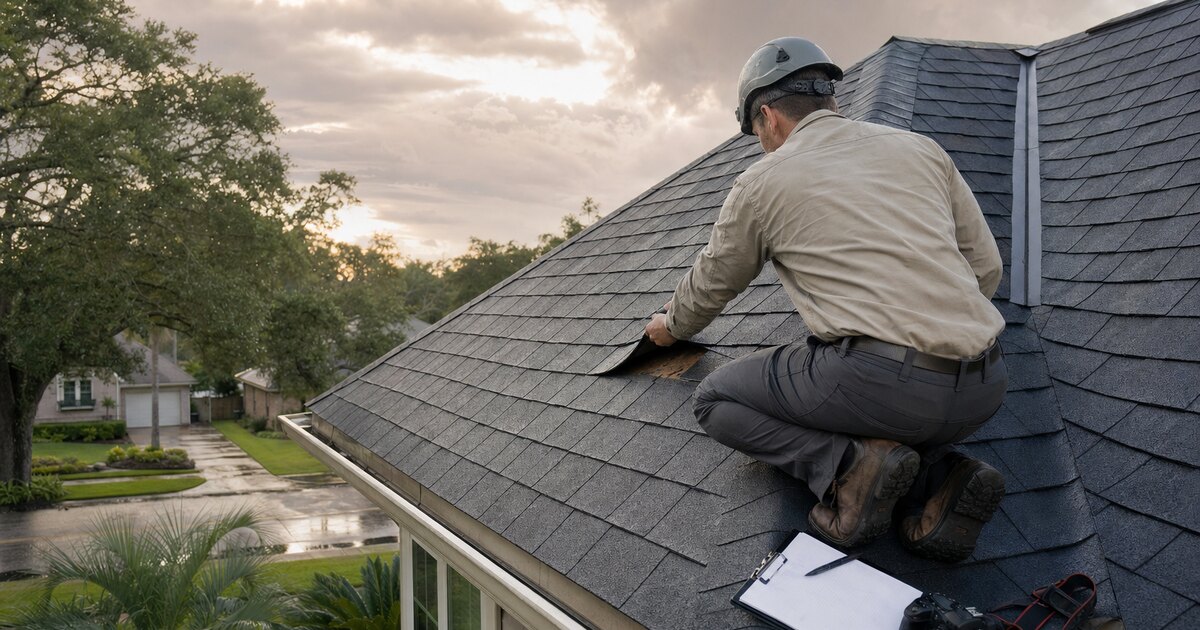
After severe weather in Louisiana, inspect the roof only after officials say the area is safe. Start inside and at ground level. Look for active water, ceiling stains, missing roofing, bent flashing, loose gutters, branches, and roof-line changes. Photograph each condition before cleanup, then arrange a professional inspection for anything you cannot see safely.
Roofs Restored in Hammond uses the following sequence for homeowners across Baton Rouge, Denham Springs, Covington, Mandeville, Slidell, and surrounding South Louisiana communities. It separates urgent safety steps from the detailed roof assessment that follows.
What Should You Check First After a Louisiana Storm?
Check people, electrical hazards, structural movement, and active water entry before checking roofing materials. A roof inspection can wait until the property is safe. A sagging ceiling, wet electrical equipment, downed line, unstable tree, or visible structural shift requires distance and qualified help rather than a closer look.
Use this order:
- Follow local instructions. Wait for evacuation, reentry, flood, and utility guidance.
- Keep clear of electricity and water. Do not touch wet electrical equipment or stand in water near electrical sources.
- Isolate unsafe rooms. Keep people and pets away from sagging ceilings, broken glass, and damaged framing.
- Look for active leaks. Observe from a dry, stable interior location.
- Document visible conditions. Take wide and close photos before moving materials or starting permanent repair.
Ready.gov's hurricane guidance, updated July 9, 2026, tells residents to follow local officials, avoid wet electrical equipment, document property damage with photographs, and contact the insurance company for assistance.
How Can You Inspect a Roof Without Climbing on It?
A safe first inspection uses the yard, street, windows, ceilings, and, only when conditions permit, an accessible attic. Do not climb onto wet, wind-damaged, or debris-covered roofing. Roof surfaces can hide loose materials, punctures, weak decking, and electrical hazards that are not visible from a ladder.
Do not enter the attic when access is wet or unstable, the ceiling or roof has moved, a tree has struck the structure, wiring or electrical equipment is wet, standing water is present, or officials have not cleared the property for entry. Stay out and contact the appropriate emergency service, utility, or qualified professional for the hazard.
| Safe viewing point | Conditions to record |
|---|---|
| Yard or street | Missing shingles or panels, displaced ridge pieces, bent flashing, branches, debris, or a changed roof line |
| Upper windows | Damage at roof edges, valleys, wall intersections, vents, chimneys, and nearby gutters |
| Ceilings and walls | New stains, bubbling paint, cracks, dripping water, or sagging finishes |
| Attic, if access is dry and stable | Damp decking, wet insulation, water trails, displaced materials, or daylight through an opening |
OSHA's roof inspection, tarping, and repair guidance identifies falls, unstable surfaces, damaged ladders, and nearby electrical lines as major post-hurricane hazards. Leave roof access and temporary covering to trained workers with appropriate equipment.
Which Storm-Damage Signs Need Prompt Attention?
Prompt attention is warranted when the roof is open to the sky, water is actively entering, a tree or large branch has struck the structure, materials are hanging loose, or a ceiling is sagging. Keep people away from the affected area and call for help. Temporary protection depends on safe weather and access; it is not a permanent repair.
Other conditions still deserve documentation and inspection:
- Creased, lifted, torn, or missing shingles
- Open metal-panel seams or displaced trim
- Bent flashing around walls, vents, chimneys, and valleys
- Loose gutters, downspouts, fascia, or soffit
- Fresh granules concentrated near downspouts
- Punctures or impact marks near seams and fasteners
- Wet insulation, musty odors, or new interior staining
A roof may look normal from the street while wind-lifted shingles or failed flashing admit rain. The reverse is also true: a visible mark does not prove that replacement is necessary. A written inspection should connect each finding to repair, replacement, monitoring, or another trade's evaluation.
What Should a Professional Roof Inspection Include?
A professional post-storm inspection should document the roof covering, edges, flashing, penetrations, valleys, drainage, accessible deck, and interior evidence. The written findings should identify where damage appears, what remains uncertain, and why the proposed scope is a repair or replacement.
Ask for:
- Dated photographs tied to specific slopes or components.
- Separate notes for storm observations and pre-existing wear.
- The likely water-entry path when a leak is present.
- A description of emergency protection already installed.
- Material names and affected quantities in the repair estimate.
- A written explanation if concealed conditions may change the scope.
For a deeper damage checklist, read the South Louisiana storm damage roof repair guide. If the visible issue appears limited to shingles or flashing, compare shingle roof repair options before assuming the full roof must be replaced.
How Should You Prepare for an Insurance Conversation?
Keep the roofer's construction findings separate from the insurer's coverage decision. A roofer can document visible conditions and price a proposed scope. The insurer decides whether the policy covers the loss, which deductible applies, what records it requires, and what it will pay.
Create one folder containing the storm date, discovery date, original photographs, inspection report, estimates, temporary-work receipts, and insurer messages. Ask the insurer whether it needs to inspect before permanent work and whether damaged materials must be retained. The storm damage roof repair and insurance claims hub compares contractor roles and repair decisions, while the Louisiana roof insurance claim checklist explains the records in detail.
When Should You Call Roofs Restored?
Call after conditions are safe when you see a leak, displaced roofing, damaged flashing, a branch impact, loose gutters, or unexplained ceiling stains. Roofs Restored is licensed and insured, has more than 20 years of roofing industry experience, and offers South Louisiana homeowners a free inspection within 24 hours and a free same-day estimate. Inspection timing still depends on safe weather, access, and damage conditions.
Request your free storm-damage roof inspection or call 985-222-2647. Describe active water, structural concerns, and access conditions when scheduling, then use the storm damage and roof insurance claims hub to prepare for the inspection, estimate, and insurer conversation.
Sources Reviewed July 26, 2026
- Ready.gov: Hurricanes, updated July 9, 2026
- OSHA Hurricane eMatrix: Roof Inspection, Tarping, and Repair
- FEMA: How to Document Damages After Severe Weather Events, April 16, 2025